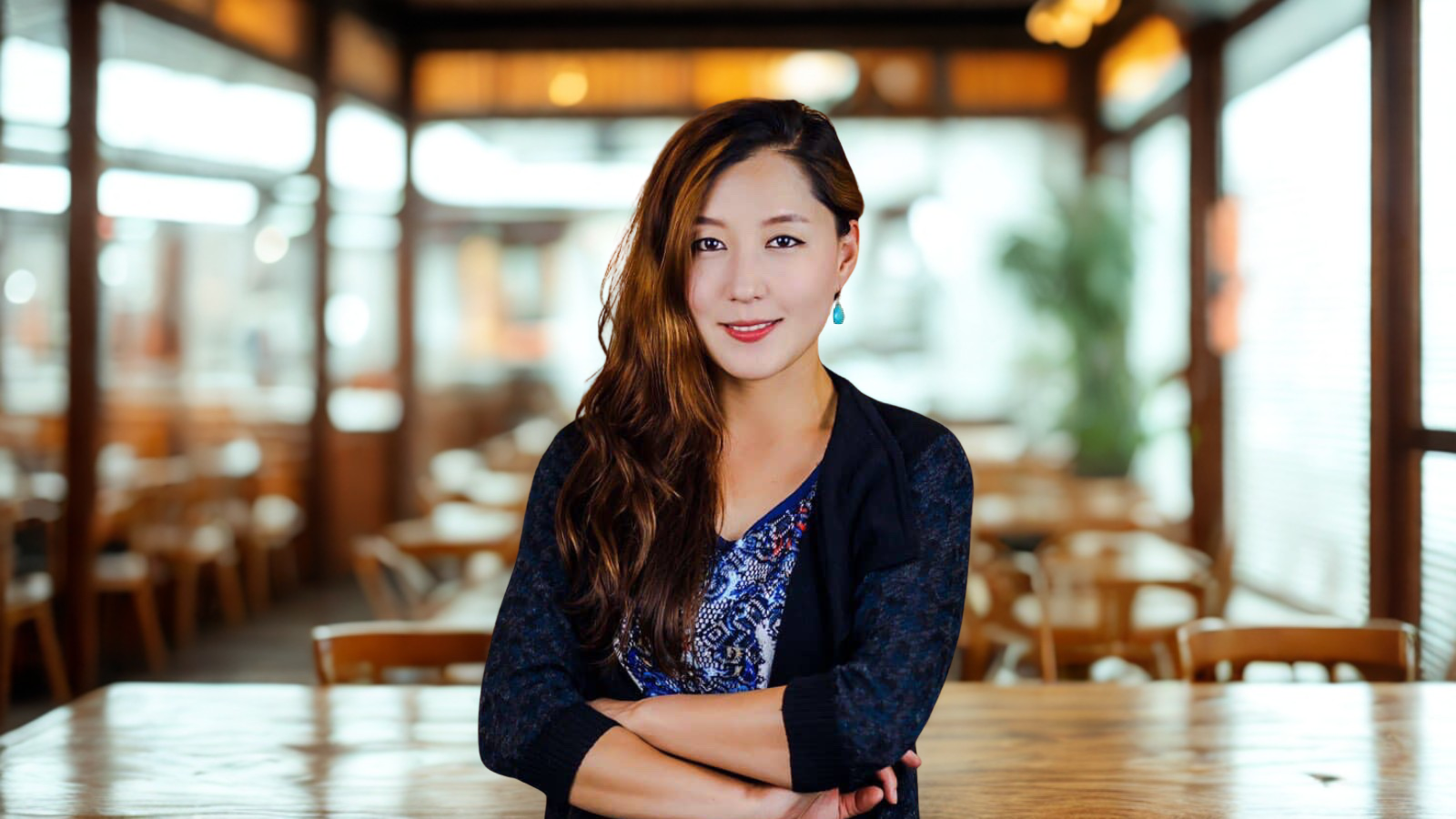
In the San Francisco Bay Area, where innovation and technology constantly reshape daily life, Judy Kim is creating a different kind of connection, one that threads together heritage and care. As the founder of BOJAGI and Mandoo Club, Judy transforms the simple acts of wrapping and cooking into shared experiences, blending Korean tradition with San Francisco’s culture of sustainability and mindfulness.
Judy’s story is one of discovering purpose through reconnection. Before she became known for her mindful creations, her path wound from South Korea to New York and ultimately to San Francisco, a journey guided by a search for meaning.
A Journey Rooted in Purpose
Judy Kim was born in Daejeon, South Korea, and immigrated to New York City at age eight. Her memories of Korea are “dreamlike”, she says, faint but comforting, while her American upbringing shaped her creative path. “I worked hard, studied fashion design, and eventually got my dream job designing women’s fashion for one of the biggest department stores in the country.”
For years, that dream sustained her, until it didn’t. Frequent work trips to manufacturing hubs in Asia revealed a stark truth behind the glamorous surface of fashion. “Behind the pretty picture, it was ugly,” she says softly. “I saw the pollution, the waste, and I cried. That wasn’t the impact that I wanted to have.”
Feeling lost, she took a break from the industry and decided to return to Korea “to find grounding.” She stayed with her aunt in the Yangpyeong countryside, where her family ran a duck barbecue restaurant. There, surrounded by the rhythms of daily life, Judy began reconnecting with her heritage through food, family, and craft. “It was during Chuseok,” she remembers. “Everyone was wrapping gifts and food with bojagi. I thought it was so beautiful, the way people treated every exchange as something precious.”
That moment planted a seed.
When Judy later settled in San Francisco, she sought ways to stay close to Korean culture. She attended a makgeolli-making class at the Korean Center, where the instructor, Sarah Kim, demonstrated how to wrap bottles with bojagi. “She said, ‘When you make something precious, you wrap it in bojagi,’” Judy recalls. “It was such a small act, but it felt deeply meaningful. It reminded me how special and beautiful this tradition is, and how it deserves to be shared.”
Bojagi designed by Judy Kim - Courtesy of Judy Kim
Weaving Bojagi into Modern Life
Before founding BOJAGI, Judy’s curiosity had already begun to take shape. What started as a personal fascination with fabric and meaning soon evolved into a creative mission to reintroduce bojagi as both an everyday object and a way of thinking.
Q: How did BOJAGI begin, and what does “modern bojagi” mean to you?
Judy: It began with curiosity. I looked online after that workshop and realized there were no locally made bojagi, only imports from Korea. So I thought, maybe I can bring my background in fashion and design into it. “Modern bojagi” to me means creating a new kind of bojagi lifestyle products made from eco-friendly materials, particularly linen due to its versatility and being the most high durability material. I reimagine its use beyond gifting for holidays, elevating every day and occasion with intention, and artistry rooted in Korean heritage.
Q: Where do you find inspiration for your bojagi creations?
Judy: I find inspiration in nature. The colors and textures I see around San Francisco, the ocean, fog, sunlight on the hills, often guide my palette. Sometimes it’s a season, sometimes it’s the way the light moves across fabric. Nature keeps me grounded and reminds me to keep my designs simple, calm, and alive.
Q: You often describe bojagi as a sustainable art form. Why does that connection matter to you?
Judy: Because it’s part of its DNA. Bojagi has always been about reuse and care. After working in fashion and seeing so much waste, I wanted to create something lasting, something that carries meaning. When people wrap a gift with bojagi, they’re choosing mindfulness over convenience. It’s a shift in mindset.
Judy smiles remembering her workshops, where participants discover the simplicity of the practice. “People say, ‘It looks so hard!’ But I tell them, if you can tie your shoelaces, you can tie a bojagi. Once they do it, they feel calm—it’s like meditation.”
Q: What do you observe in people’s reactions during your workshops?
Judy: There’s usually an emotional connection. Some people share nostalgia about family history like their grandmother wrapping a bojagi gift for them ; and some people will share the joy and wonder of the artform being so easy and environmentally friendly.
Q: You’ve said bojagi is going through a renaissance in Korea. What does that look like?
Judy: It’s beautiful to see. There’s a revival of interest, not only wrapping but also jogak bojagi, the patchwork art. You see it in table décor, wall hangings, even fashion. And globally, it’s being embraced too. In Copenhagen, I saw bojagi-inspired design everywhere. It fits so naturally with Scandinavian hygge, comfort, simplicity, harmony.
Q: And historically, bojagi also has a powerful story.
Judy: Yes, it began in the Joseon dynasty as ceremonial wrapping for Buddhist offerings and royal gifts. Later, it became part of daily life. What’s fascinating is that bojagi was the first craft women in Korea were allowed to sell commercially. They used scraps of fabric from making hanbok and turned them into something beautiful. It’s women’s art, sustainability, and empowerment all stitched together.
Bojagi Workshop - Courtesy of Judy Kim
A Philosophy of Care and Harmony
Judy’s work extends far beyond fabric and thread, it’s about the emotional and cultural meaning behind every gesture. Her Mandoo Club gatherings, where people come together to fold dumplings and share stories, echo the same care and connection found in her bojagi practice.
Q: You describe bojagi and mandoo as acts of connection. How are they related?
Judy: Both are about bringing things together, literally. You wrap dumplings, you wrap fabric. It’s about finding harmony and balance. That’s a core Korean value: 조화 (johwa), harmony. Whether it’s through food or fabric, you’re practicing the same philosophy.
During the pandemic, Judy launched Mandoo Club, hosting dumpling-making gatherings first online, then in her backyard. “Everyone came, families, doctors, neighbors. It became a way to comfort people,” she says.
Q: What do you think bojagi teaches people about mindfulness or care?
Judy: It slows you down. You can’t rush it. You have to be gentle, intentional. That’s why I call it a meditation. In Korean culture, care is shown through effort, through the act of making, preparing, wrapping. That’s what bojagi represents.
At one point in our conversation, I shared how moving it is that something so simple can carry such depth, that a single piece of fabric can hold entire worlds of meaning. Judy nodded. “Yes,” she said. “The smallest things hold the biggest meanings.”
Q: What do you hope people feel when they experience bojagi for the first time?
Judy: I hope they feel connected ; to themselves, to others, to something bigger. That sense of belonging is powerful. I didn’t always feel connected to Korea growing up, but through these practices, I’ve built my own bridge back.
Expanding the Thread
In 2024, Judy collaborated with Korean American Hwanghah Jeong, the owner of San Francisco’s first makgeolli tapas bar Jilli SF, to feature a bespoke bojagi installation. “It was such a natural fit,” she says. “Makgeolli and bojagi are both ancient Korean traditions, and we wanted to bring them into a modern space that feels joyful and accessible.”
Her next goal is to make bojagi more visible, not just as craft, but as design and art. “I’d love to see it in homes, hotels, public spaces,” she says. “It doesn’t just belong in Korean restaurants or museums. It belongs in everyday life.”
Judy is also partnering with SCRAP SF, a local nonprofit that promotes creative reuse. “You don’t have to buy mine,” she says with a laugh. “Any fabric will do. What matters is the act, wrapping something with care and passing that intention forward.”
Across the U.S. and beyond, Judy is connecting with other Korean American artists exploring similar paths. “It’s not just me,” she says. “It’s a global movement. We’re stitching pieces of culture together.”
We’re stitching pieces of culture together.
K-drama "Bon Appétit, Your Majesty" Poster, source: CJENM
When asked for a Korean cultural work that inspires her, Judy recommended the k-drama Bon Appétit, Your Majesty, a whimsical time‑travel romance in which a modern chef lands in the Joseon palace and uses food to tell stories of hope, identity, and culture. “I love Korean dramas that show the warmth of everyday life,” she said. “Where food, family, and care all come together, they remind me why I do this work.”
In her words, and in her work, the message is clear: through every fold, wrap, and shared dish, we can find connection. “When you wrap something, you’re showing care,” she said. “It’s not just covering—it’s a gesture of love.”
Like the layered fabric of bojagi, life’s seemingly separate pieces can come together as one. And for Judy, connected pieces are part of a larger design, one where Korea and San Francisco, culture and innovation, art and life, can merge in harmony. With each fold and thread carrying a different story, contrasting yet enhancing one another, this story of interconnectedness shows that what begins separately can be woven into something enduring and beautifully complete.