Building Bridges: A Lifelong Commitment to Korean-American Cultural Connection
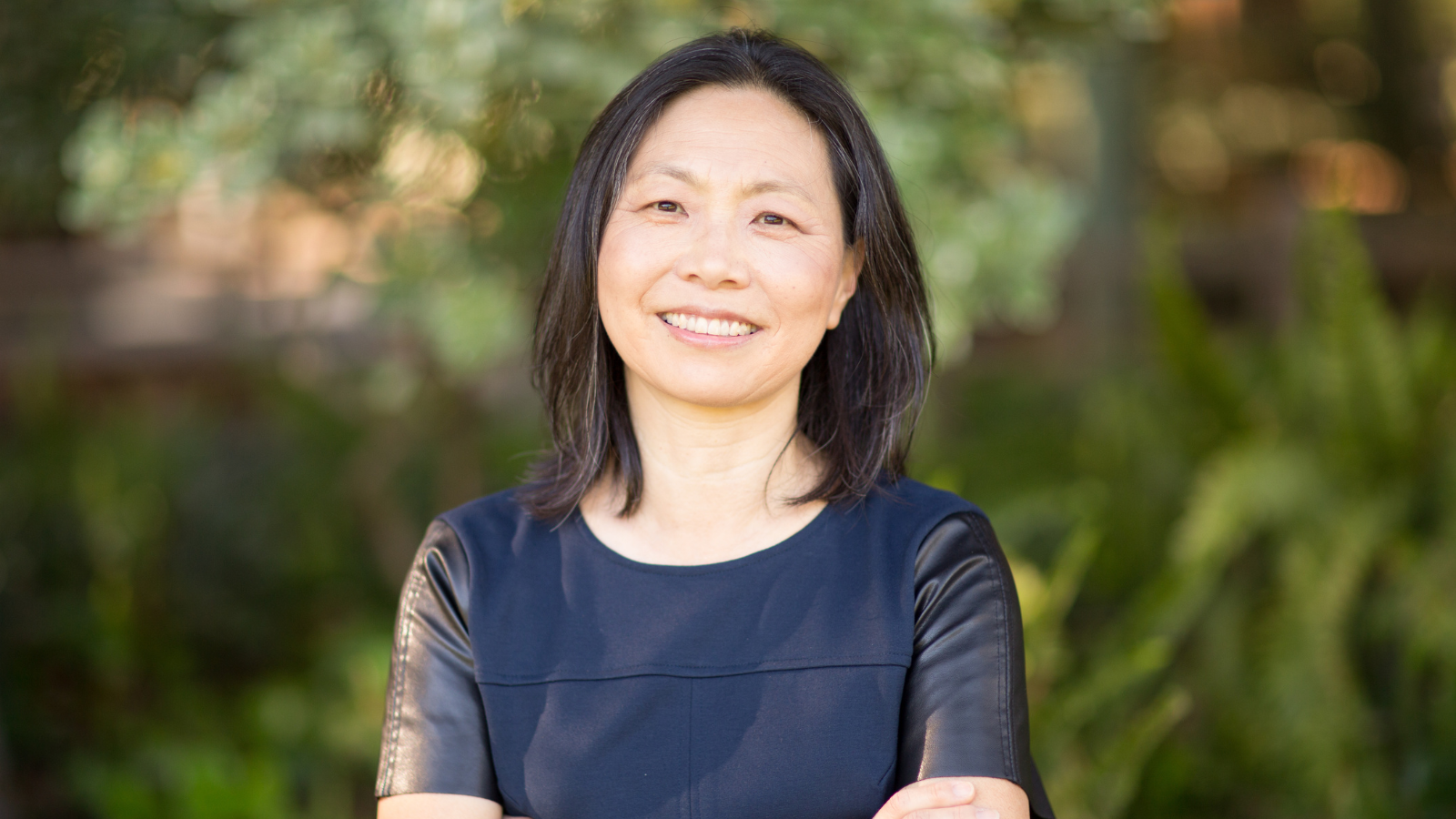
Joy Yi Boatwright’s path to becoming a cultural bridge between San Francisco and Seoul began with an intuition and a promise. At 23, she walked away from a promising retail career at the iconic luxury department store Bergdorf Goodman to move to Seoul, driven by the belief that being Korean American meant something deeper. Three decades later, as a director of the San Francisco Seoul Sister City Committee and former chair of the Asian Art Museum’s Korean Art and Culture Committee, she continues to honor that original commitment to tie her two cultures together.
PERSONAL ROOTS AND EARLY INSPIRATION
Born in Korea, Joy immigrated to New York City with her family when she was almost two years old. She spent the next two decades growing up in New York, fully immersed in American culture while maintaining her Korean heritage at home. By her early twenties, she had built a successful career in retail, rising to become a buyer at the prestigious Bergdorf Goodman—but something was calling her back to her birthplace. At 23, she made a decision that changed everything: she quit her job and moved to Seoul.
The decision wasn’t made lightly. “I thought that as a Korean American, there was a reason I was born with two heritages. I had a conversation with my father and told him that I wanted to quit my job and move to Korea. I wanted to make sure that I could explore and understand the Korean side of me as well as the American side of me. And when I did that, I also had made a commitment that no matter what I did in my life, that I would always tie the two cultures.“
Her father’s unexpected support launched what would become a formative three-year experience in Seoul that included everything from encounters with Korean gangsters straight out of dramas to high-level meetings with George Soros and Michael Bloomberg during the 1997 Asian financial crisis.
"No matter what I did in my life, I made a commitment that I would always tie the two cultures."
CONNECTING CULTURES THROUGH ART
When Joy returned to the US and moved to San Francisco in 1998, she was determined to honor the commitment she had made to herself before leaving for Seoul—to always tie the two cultures together. Through a friend from university, Michael Kim, she discovered the Korean Art and Culture Committee at the Asian Art Museum—her first entry point into the Bay Area’s Korean community.
The committee had formed around a crucial need to improve the Korean culture presence at the museum. When philanthropist Susan Koret visited the Asian Art Museum at Golden Gate Park (note: the museum is now located in the Civic Center area), she was shocked by Korea’s minimal representation. “The Korean art department didn’t even really have a gallery. It was just in the hallway between China and Japan“ Joy recalls. There was essentially one small table with a few Korean pieces, hardly befitting Korea’s rich artistic heritage.
Hallyu Expo at the Asian Art Museum, 2024
Q: What was it like working with Dr. Kumja Paik Kim, the museum's first Korean art curator?
Joy:She was amazing, so talented and so knowledgeable and had an incredible eye. She would make the history and the art come to life for the committee. She had so much knowledge that she would share with the committee. All the members were very close and we spent a lot of time together. We were in charge of helping the curator with the Korean art department, raising funds for Korean art and doing community events.
Joy chaired the committee for 15 years, during which they systematically built the museum’s Korean collection. “If you ever walk through the Korean Art Gallery at the Asian Art Museum, a lot of those pieces were procured by our committee.“ Their acquisitions included a beautiful moon jar and various significant wall pieces that visitors can see today.
The committee also organized innovative cultural programming, hosting annual galas specifically to raise funds for art acquisitions. One particularly memorable program featured modern hanbok fashion shows, where Academy of Art graduate students studied the museum’s Korean collection and created contemporary interpretations of traditional designs.
Q: Tell us more about the very special dress that you were wearing at the hanbok fashion show.
Joy:The student who made my dress was Mexican American, nothing to do with Korea. She had walked through the gallery, then looked at pictures of hanbok and then created her own version. It was such an amazing experience, and such a beautiful connection with Korea and the Bay Area to use the Academy of Art grad students to use their talents to create something like that.
Joy was featured in the San Francisco Chronicle wearing one of these contemporary hanbok designs, symbolizing the successful fusion of traditional Korean aesthetics with modern American artistry.
The museum work laid the foundation for Joy’s later involvement with the San Francisco Seoul Sister City Committee, as both roles centered on her core commitment to cultural bridge-building. The skills she developed in fundraising, cultural programming, and community building would prove invaluable in her work connecting San Francisco and Seoul.
Joy Boatwright at the Asian Art Museum's opening night gala for In Grand Style: Celebrations in Korean Art during the Joseon Dynasty on October 24, 2013. Claudine Gossett for Drew Altizer/Drew Altizer Photography
THE SISTER CITY MISSION
The San Francisco Seoul Sister City Committee, which Joy joined in 2013, serves as a bridge between the two cities to strengthen cultural and commercial ties. The committee operates on the principle of mutual learning—identifying innovations and best practices that each city can adopt from the other. Their work emphasizes tangible outcomes and people-to-people connections, creating lasting relationships through educational exchanges, cultural programming, and business partnerships that benefit both communities.
As the committee approaches its 50th anniversary next year, its work spans three key areas: education, arts, and technology. The committee’s work operates on multiple levels: organizing regular delegation trips to facilitate knowledge exchange between city officials and business leaders, while also implementing direct programming and grant-making to support Korean cultural initiatives in the Bay Area.
Q: Can you give us an example of how the committee identifies innovations that each city can learn from?
Joy:When we went on our first delegation trip in 2013, we went with mayor Ed Lee and that was such a great experience because we got to sit in the Seoul mayor’s office and look at the whole transportation grid of Seoul and understand how the subway system and metro system in Korea is excellent. You can go 10 floors below ground and people can still have wifi. The technology was already so advanced. We also went to Samsung’s healthcare division in Incheon, and we met all these scientists who had come originally from Genentech for example. So they were Americans, Canadians and such, but they were living in Seoul, working for Samsung in their biotech and healthcare system. They were talking about how the technology is so advanced in Korea that they would land at the airport with their luggage and it would arrive in their apartment without them having to pick it up. When they pulled up in their car to their apartment, it would just open because it scanned them and knew it was them.
Q: Tell us about the committee's Scope Grants program.
Joy:The committee’s Scope Grants program provides $10,000 grants to nonprofits whose missions align with sister city values. In 2025, we are supporting two organizations: SFKIEA, which assists the Korean immersion program at Claire Lilienthal school, and Take Root, which offers creative outlets for Korean immigrant women. SFKIEA is a group of parents working with Claire Lilienthal to help the teachers and make sure there’s enough resources in the classrooms to do the Korean Immersion Program, because a lot of the funding has been cut. Take Root is for immigrant women who immigrated from Seoul to San Francisco or the Bay Area, giving them creative outlets to express their cross-cultural experience through art classes and art projects.
One of the committee’s most successful initiatives involves Claire Lilienthal, one of San Francisco’s only Korean immersion public schools. The committee fundraised in 2019 to send fifth and sixth graders to Seoul for cultural exchange—a program delayed by the pandemic but finally realized in 2024.
Q: How impactful was the student exchange program with Claire Lilienthal?
Joy: The program was very successful. The children, even though they had spent only 24 hours with the families doing homestays, were hugging and crying when they left each other. They bonded so fast, and they all talked about how the Korean students have to come to the United States for the exchange as well. Claire Lilienthal is a public school, so we can’t assume that people have the means to send their children on this kind of experience. We raised enough funds to make sure that any student who wanted to go this year would be able to go.
Q: How has the Sister City Committee's focus evolved over the years?
Joy:The committee has evolved its focus over time, reflecting both cities’ changing priorities. Recent delegations have been emphasizing artificial intelligence and emerging technologies.For example, the business members in a recent delegation were offering to work with the AI department of a big company here in the United States, and they wanted to collaborate more with Seoul and with Korea. In the mayor’s office, they invited them to come back for another meeting or an AI conference.
The SF Seoul Sister City Committee facilitated significant business connections during past trips, including meetings between Uber’s founder and Seoul’s mayor’s office when the company was trying to establish operations in Korea.
As the Sister City Committee prepares for its 50th anniversary, plans include a major delegation trip with San Francisco’s mayor’s office and reciprocal visits from Seoul’s mayor. The milestone represents decades of relationship-building that have evolved from ceremonial partnerships to substantive collaboration.
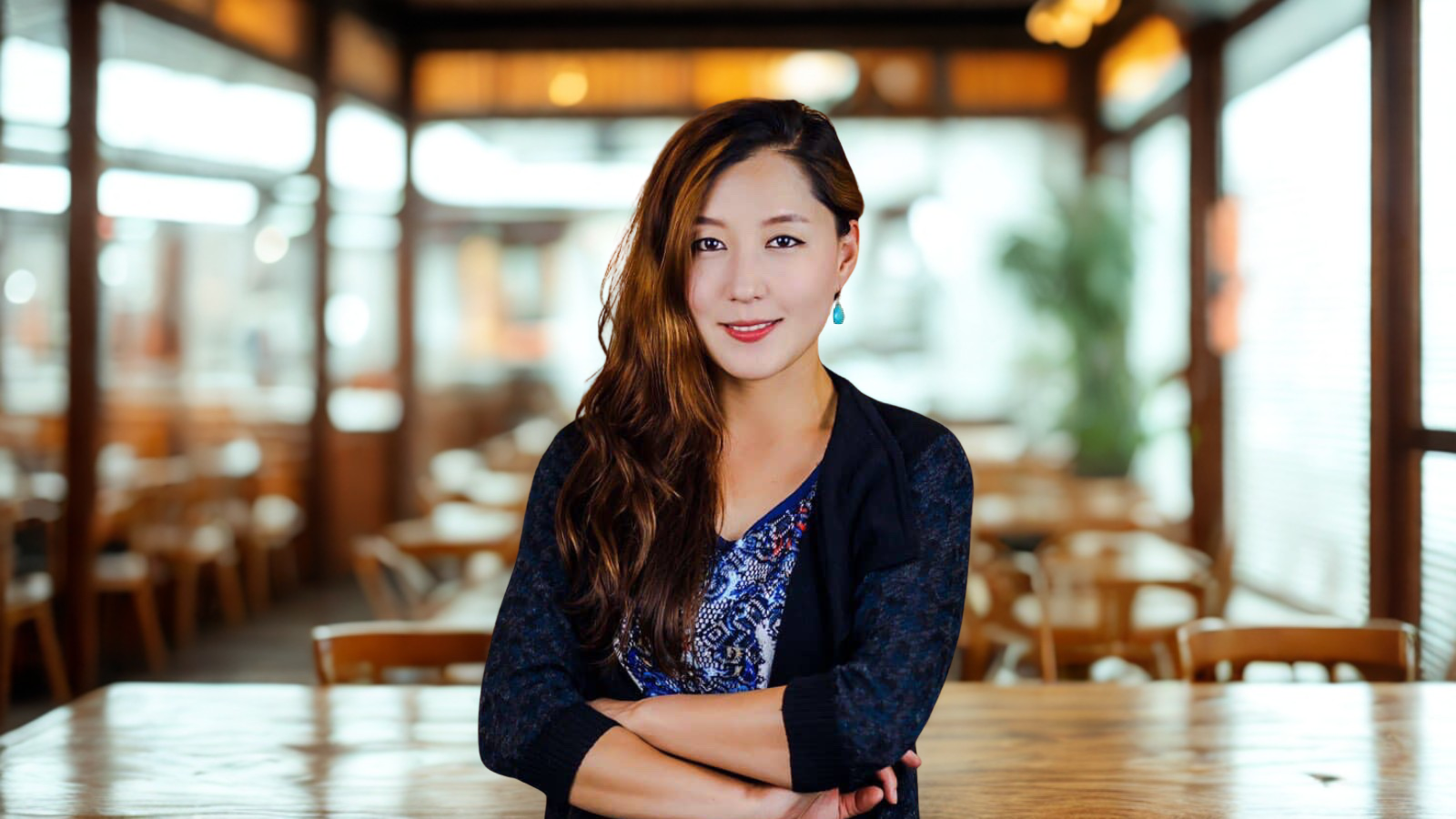
Soyoung Kim
THE CHUSEOK GALA AND FUNDRAISING
The committee’s annual Chuseok gala serves as both cultural celebration and major fundraising event. This year’s gala on September 26th features an incredible calligraphy artist from Korea creating a live mural that will be auctioned.
“Her art is historical and modern all in the same way with calligraphy art, and she’s gonna do a whole mural while at our gala that we’re going to actually auction off.“
The funds raised support various committee initiatives, from student exchanges to community grants, ensuring the continuation of cultural and educational programs.
WITNESSING KOREA'S GLOBAL TRANSFORMATION
Joy’s three decades of cultural work have coincided with Korea’s dramatic rise in global awareness. “Growing up in the United States, people did not know what Korea was. When they met an Asian, they asked, ‘Are you Chinese or Japanese?’. There was no acknowledgement of another country.“ The Korean Wave has fundamentally changed this landscape: “Now everyone knows Korea, and it’s very exciting, but it’s also overwhelming to process because we’ve never had that experience growing up in the United States.“
This transformation creates both opportunities and challenges for cultural organizations working to preserve traditional elements while embracing contemporary expressions. For Joy, it validates her original intuition about the importance of cultural bridge-building. “My whole dream has been that when someone says, ‘I’m Korean’ or ‘I’m from Korea,’ people are not asking where this is. Everyone should have some understanding of what that means.“
When asked about Korean cultural works that resonate with her personally, Joy pointed to the KYOPO project—a book documenting Koreans outside of Korea, whether by choice or circumstance. “These are all Koreans who did not live in Korea. Yet the artist found this connection with the diaspora. It’s a very nice way to see that connection to Korean culture no matter where you are.“ The book features 240 portraits of diverse Korean diaspora members, including Joy, but also public figures like Daniel Dae Kim, all photographed with the same neutral expression to emphasize their shared heritage despite different paths.
Now everyone knows Korea, and it's very exciting, but it's also overwhelming to process because we've never had that experience growing up in the United States.
Joy’s work continues to embody her original conviction that being Korean American means building bridges—between countries, cultures, generations, and communities. Through education exchanges, business facilitation, cultural events, and policy discussions, she transforms that personal commitment into institutional impact, one collaboration at a time.